
LIFE RESTART

 The production of bioplastics from brewers’ spent grain gets starting with LIFE RESTART. Aiming at sustainable development

 Circular economy, research and innovation, environmentally and socially sustainable development. Starting with community development. These are the main strands of LIFE RESTART, Reuse of bEer SpenT grAin foR bioplasTics, a project co-financed by the European Union under the LIFE Programme for Environment and Climate Action and starting in October 2022.
Led by the Me.S.S.In.A Foundation and characterised by an important partners network – EcosMed social cooperative, University of Messina, Crossing Srl, spin-off of the Ca’ Foscari University of Venice, Birrificio Messina, initially Bibetech was succeeded by Giardineria Italiana, the project is characterised by a strong innovative potential.
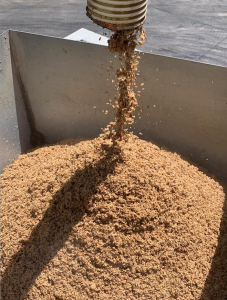
Indeed, LIFE RESTART aims to respond to some of the most pressing environmental issues related to the disposal of spent grain, the main waste product of the brewing process, by using it for the first time for the production of green, biodegradable, recyclable and market-competitive bioplastics. In a circular economy perspective, the spent grain is thus transformed from ‘waste’ into a valuable resource for the production of new biomaterials that could represent a valid alternative to fossil-based plastics.
There is more to it. At the same time, LIFE RESTART addresses important social issues, aiming to implement a solid business plan and a related social business model that will allow for the employment of disadvantaged people and for the generation of economic resources for the sustainable development of local community and territory where the production hub is located. The production hub of the new bioplastics, the ‘Zero Factory’, will be in Roccavaldina, a small rural municipality in Messina’s inner area (Sicily). With an integrated approach oriented towards the promotion of the territory and the creation of new opportunities, LIFE RESTART thus aims at counteracting the marginalisation and depopulation phenomena characterising inner areas.
Semi-industrial production
The close to market project will lead to the production on a semi-industrial scale of the new bioplastics and to the realisation of some prototypes of artefacts of interest to the market (e.g. food containers, coffee capsules, vases and others).
The process and technology deployed by LIFE RESTART are original and replicable and aim to achieve important environmental and social objectives.
- From an environmental point of view, the recovery of brewers’ waste water also brings a profitable re-use of brewery wastewater and a reduction in the organic pollutant load contained in it. The production of the new bioplastics also leads to a reduction in the consumption of fossil-based polymers (traditional plastics) and the use of virgin biopolymers.
- On a social level, the creation of new, green and skilled jobs is promoted, as well as a business model oriented towards a just growth of the local community. Specifically, seven new jobs will be generated in the Roccavaldina area, two of which are reserved for socio-economic disadvantaged subjects.
Replicability and transferability
Because of the characteristics of its technology and processes, the project is also tackles the issue of its replicability on other territories and the transferability to other agrifood sectors.
In fact, within three years after the end of LIFE RESTART, it is planned to build at least four more plants in the EU for the production of the new bioplastics and the ability to create up to 35 new jobs by promoting the replicability of the process in other territories besides Sicily where it will be initially implemented.
Feasibility studies are also planned to assess the possible use of the new bioplastics for additional products to those initially planned and the transferability of the LIFE RESTART technology to other agro-food chain wastes.
Co-funded by the European Union. Views and opinions expressed are however those of the author(s) only and do not necessarily reflect those of the European Union or CINEA. Neither the European Union nor the granting authority can be held responsible for them.